
Counted In: Reclaiming Math as a Democratic Language
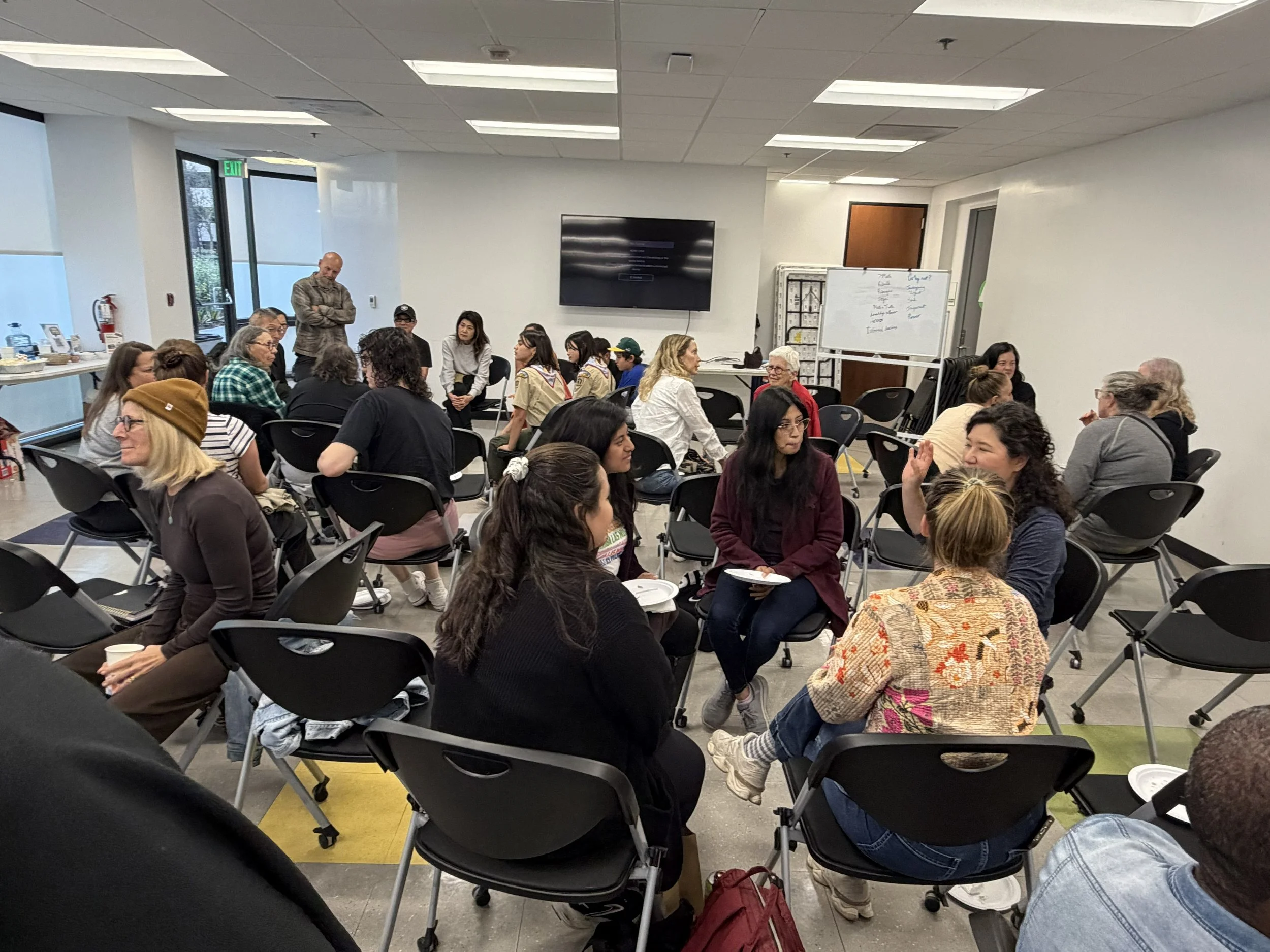
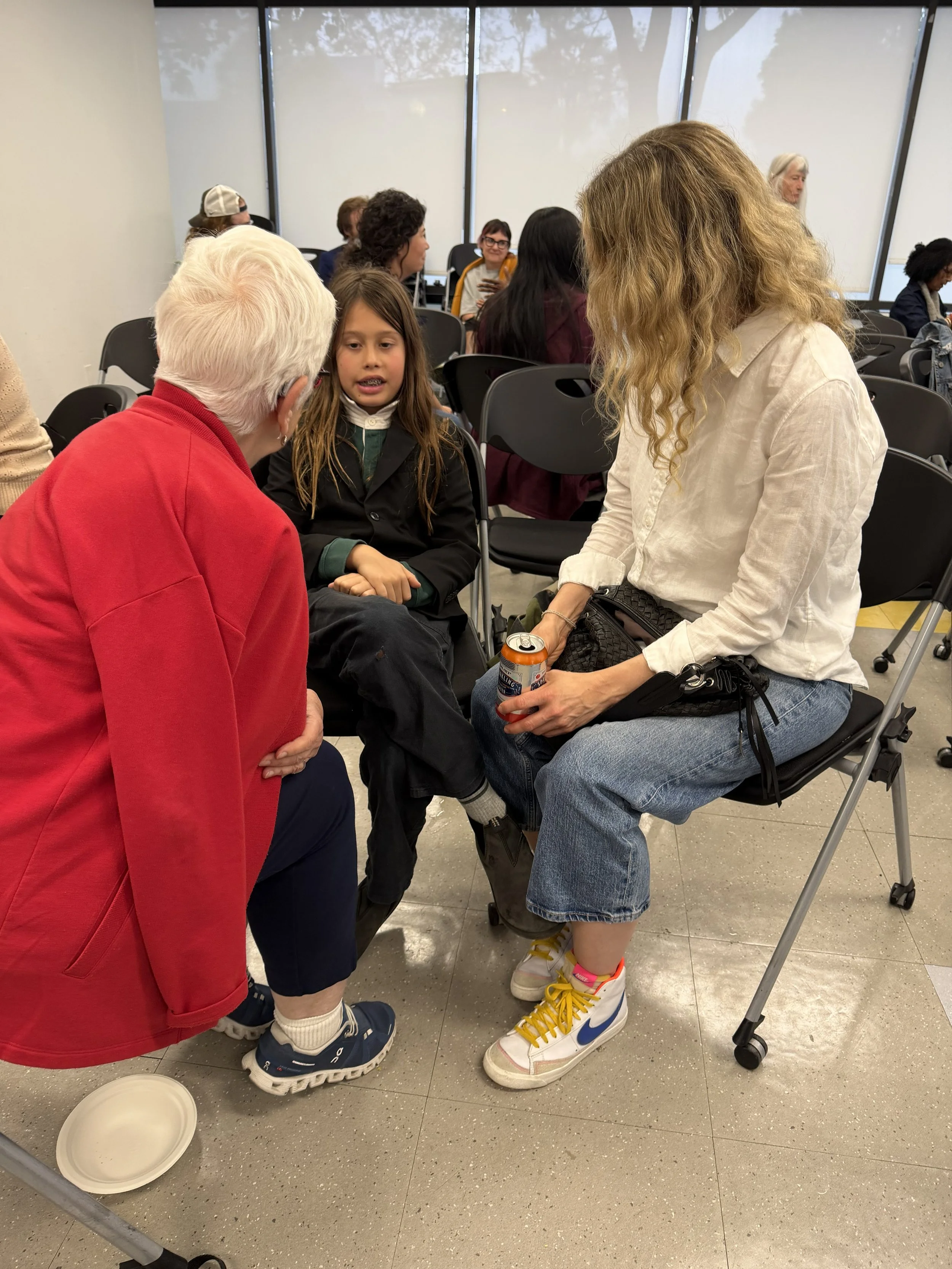
At this past Monday’s Tea & Talks, Bahala and Civic Bites hosted a screening of the documentary Counted Out for the Santa Monica community, followed by a discussion moderated by Lincoln Middle School math teacher Dr. Eric Moe. Thirty-five people attended and stayed afterwards for the discussion. The conversation that unfolded echoed the film’s central tension: math is everywhere, influencing everything from elections to parole decisions, yet many people feel locked out of it.
The roots of exclusion begin early. As the film makes clear, mathematics—arguably the most powerful language for shaping modern life—has been systematically positioned as inaccessible to many.
While all learning is difficult when done well, only math carries a cultural permission structure for failure (“I’m just not a math person”). Whether heard implicitly or explicitly from teachers or the culture, assumptions around ability based on gender/class/race, or the stratification in many school districts that sorts students into different levels, math masquerades as a neutral tool, but functions as a gatekeeper.
This matters because math is not neutral. But because math is both stigmatized and seemingly understood by only the select few, a troubling paradox emerges: math is deeply embedded in public life, but the public discourse around these issues is rarely mathematical. Even when the Supreme Court confronted questions like whether gerrymandering can be detected, they sidestep the math entirely. But that avoidance is itself a decision—one that leaves powerful tools in the hands of a few.
Yet the way math is often taught obscures this power. Students encounter it as a series of abstract symbols disconnected from their lived experiences. They are told, implicitly or explicitly, that only some people are “good enough” to understand it. And because math is equated with intelligence, those who struggle are left to conclude that they themselves are lacking.
This is not just an educational failure; it is a civic one. When math becomes a sorting mechanism—deciding which students have “potential” and which do not—it reinforces existing inequalities. The film draws a line from this system to broader historical patterns, suggesting that inequities in education echo structures that never fully disappeared. In this sense, math classrooms can replicate a kind of “assigned work” mentality, where students are trained to follow procedures rather than to question, explore, and create.
The documentary highlights alternative approaches, such as the Algebra Project founded by civil rights activist Bob Moses. In these classrooms, math is not something imposed from above but something discovered through shared experience. Students begin with real-world contexts—field trips, everyday observations—and use their own language to describe patterns and relationships. From there, they build toward formal mathematical concepts.
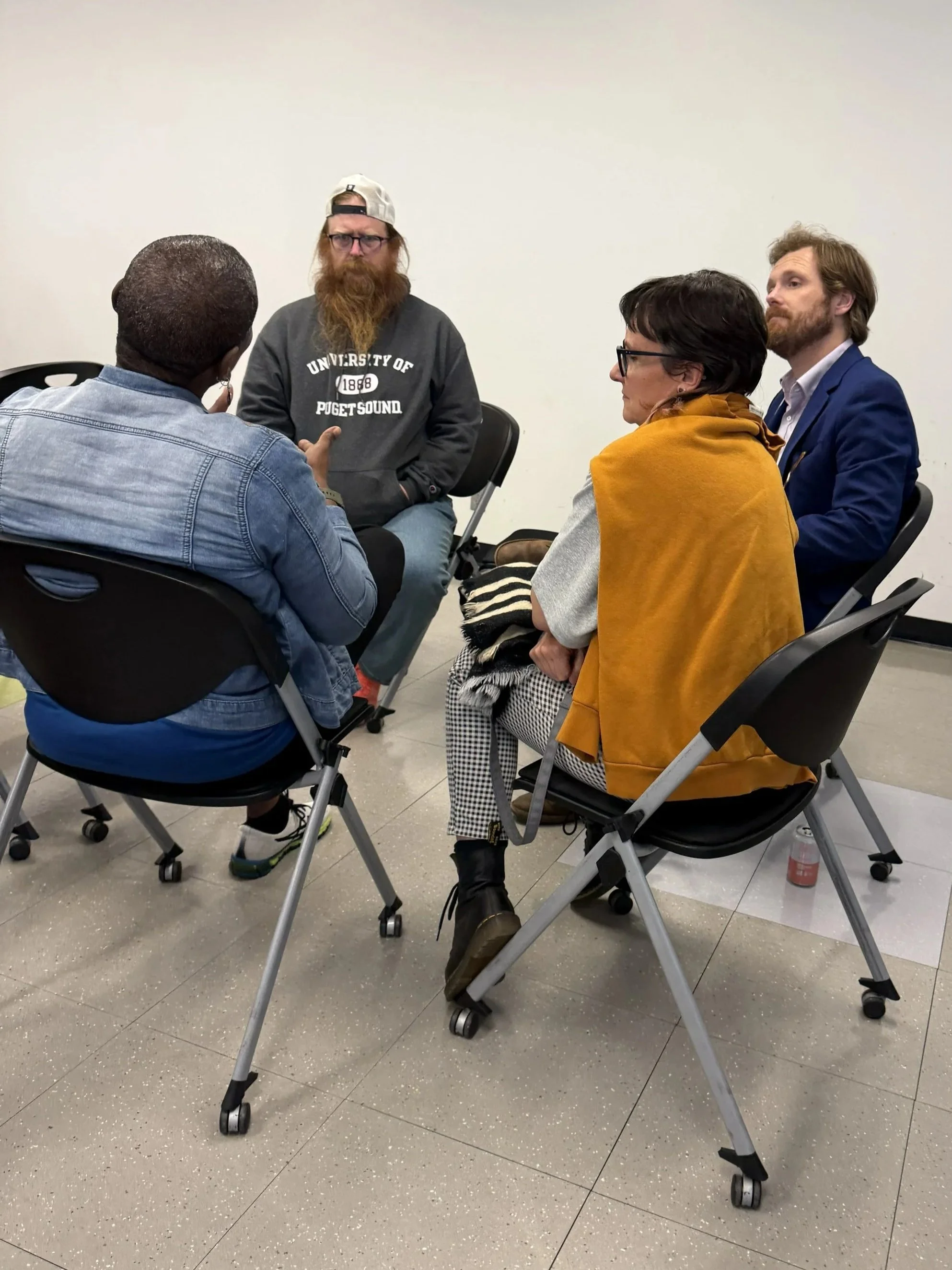
We are all born with an intuitive sense of patterns, quantities, and relationships. The best version of math education builds on that inheritance, doesn’t suppress it. The best teachers, like Moe and the others who attended and stayed for the discussion, infuse their classrooms with creative activities to reach standardized goals, but because math is quantitative, the objectives are more rigid. Moe admitted that not every teacher has the energy or ability to teach students to construct rollercoasters out of PVC pipe to teach slope!
But projects like these, including Lincoln Middle School’s multi-disciplinary Cardboard Connections arcade project, underscore a hidden truth: quantitative literacy actually resists the seductive authority of numbers presented without context and instead invites skepticism and deeper inquiry.
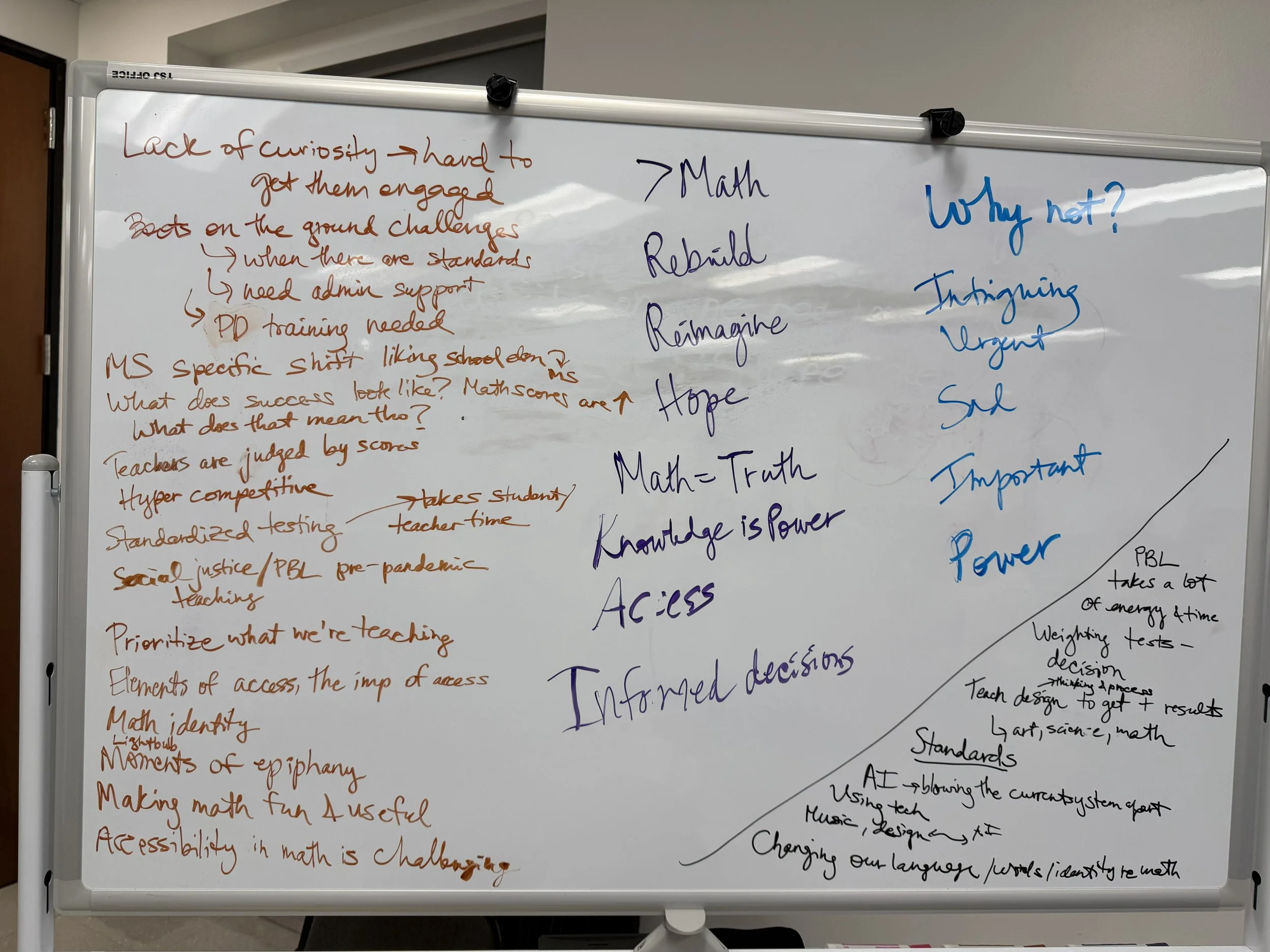
The group at Tea & Talks discussed ways to encompass both the optimism sparked by the film and the current reality for math teachers on the ground who are beholden to content/testing standards. Parents and community members can use “good math” to garner district support for training and professional development for math teachers. If we think of our advocacy like a triangle, the hypotenuse would connect classroom discourse, experimentation, and curiosity with testing objectives. It’s a challenge, but try telling that to Bob Moses, who fought for civil rights and created the Algebra Project.
This shift has the potential for profound learning. It transforms math from a spectator activity into a participatory one. Students are no longer passive recipients of knowledge but active contributors, making conjectures, testing ideas, and refining their thinking. They learn that math is not just about answering questions but about “finding the right ones.” As one student in the film puts it, “Math gave me a voice. I belong here, too.” If math is a language of power, then access to it is a matter of equity.
At its best, math is the language for making those assumptions visible. It is a way of proving, of clarifying, of asking what data am I not seeing? One of the most compelling ideas in Counted Out is that math is a “supercharged common sense.” It trains us to form conjectures and to consider counterarguments—to hold what the film calls “informed ambivalence,” the ability to remain open while grounded in evidence.
The entire evening felt like “math done correctly”—from Catherine, a parent in the district, coming across the film (the algorithm), sharing the idea to screen it with Erika, Erika proposing to jointly host the film and discussion at Tea & Talks (optimization), the community showing up in good faith, and Dr. Moe shaping an empowering civil discourse.
The question is not whether math belongs in our lives. It already does. The question is how to help more students and citizens claim it.
Jessica Cole